Format Guide
Pokémon Champions Format Rules Explained
3 min read
Pokémon Champions is a standalone competitive format built around a curated 186-Pokémon roster, Level 50 doubles battles, and a tight 66-EV cap. If you are coming from VGC or Smogon singles you already know the grammar of competitive play — this guide covers the pieces that are specific to Champions so you can stop translating and start building.
The roster
Every Pokémon Champions battle is fought with a subset of the full National Dex. The official roster currently caps at 186 Pokémon, and anything outside that list is unusable regardless of power level. Because the roster is hand-picked rather than banlist-driven, Champions avoids the "overlap with Smogon OU minus Ubers" feel — it is its own metagame.
If you want to browse every legal Pokémon, the Pokédex is the canonical index. Filter by type, sort by stats, and click through to per-Pokémon pages for role context and current usage data.
Level 50 and the 66-EV cap
Two mechanical rules define how teams are tuned:
- All Pokémon are set to Level 50. Damage rolls, speed tiers, and HP breakpoints are calculated at that level — a Level 100 calculation from an older resource will mislead you.
- Effort Values are capped at 66 total, with a maximum of 32 per stat. This is the single biggest adjustment for players arriving from the 252/252/4 VGC spreads. You cannot max two stats; every spread is a trade-off.
The practical effect is that pure min-max builds (full Speed + full Attack) are rare. Most competitive spreads allocate 32 into the primary offensive stat, 32 into Speed or a bulk stat, and route the remaining 2 into a benchmark. The Team Builder enforces the cap automatically and will flag spreads that exceed it.

Speed control in a Level 50 world
Speed tiers cluster tightly at Level 50 with a 32-EV maximum. A 1-point difference in base Speed often decides the turn order, which is why Choice Scarf, Tailwind, Trick Room, and priority moves all stay relevant — they break the natural tier rather than climb it. The Speed Tiers chart shows the full list with nature and item modifiers already applied.
Mega Evolutions
Mega Evolution is legal in Champions and several Megas — Charizard, Garchomp, Metagross, Gardevoir — sit near the top of the meta. The rule of thumb from older generations still applies: one Mega per team, slotted on your most tempo-sensitive attacker. Unlike some earlier formats, Megas do not count against your item budget beyond the Mega Stone itself.
Item rules
Items are mostly unrestricted. Choice items, Life Orb, Focus Sash, Leftovers, and berries are all legal. The only hard rule is that duplicate items within the same team are allowed — you can run two Choice Scarfs if the team wants it. Mega Stones are tied to their host Pokémon, so trying to hold Charizardite Y on a non-Charizard silently does nothing.
Damage and team validation
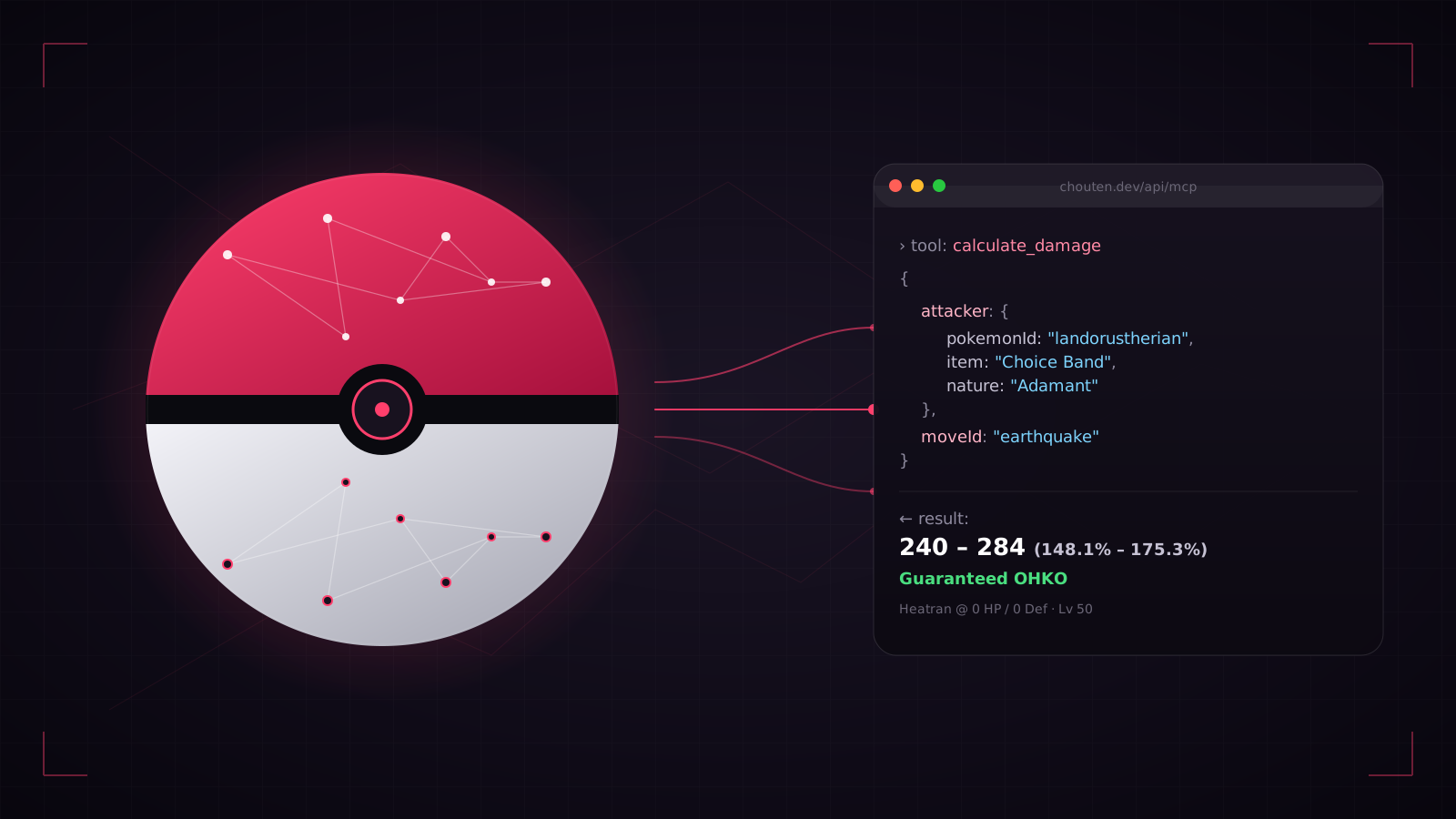
Before submitting a team, run the key matchups through the Damage Calculator at Level 50 with 32-EV spreads — the numbers land differently than the ones you memorized from VGC. Overkill rolls, survivability lines against common spreads, and Choice Scarf speed checks are all worth sanity-checking.
Where to go next
If you are still sketching a team, start from the Meta page to see which Pokémon are trending. Pick a win condition, build a defensive backbone around it, and fit the rest into the 66-EV cap. The format rewards deliberate spreads more than raw statlines — spend the time on the tuning pass.