Mechanics
Level 50 Mechanics in Pokémon Champions
4 min read
Every Pokémon Champions battle is fought at Level 50. That single rule quietly changes almost every number you might have memorized from other formats — damage rolls, speed tiers, HP breakpoints, priority brackets, even the threshold for common OHKOs. This article walks through what Level 50 actually means for team building in Pokémon Champions.
Stats at Level 50
The Pokémon stat formula multiplies a Pokémon's contributions by its level, so dropping from 100 to 50 halves most numbers. A 252 HP / 31 IV Snorlax that sits at 523 HP at Level 100 is 264 HP at Level 50 — and Champions clamps the EV contribution further via the 66-EV cap, so the comparison is even starker.
The practical consequence: damage rolls are proportionally larger relative to health pools. A 60-BP move at Level 100 might tickle a wall; at Level 50, with tight EV budgets, the same move routinely chips 20–25% off. Every calc you run has to be run at Level 50, not fudged from a Level 100 number.
Speed tiers get compressed
Because the stat formula scales with level, Speed tiers at Level 50 are compressed. A Pokémon with 100 base Speed sits at 156 at Level 50 with a neutral nature and 32 EVs — the meaningful spread between the fastest and the slowest common attackers is only around 90 stat points, half the Level 100 gap.
The effect on team building:
- Speed creep is a 1-point game. 32 EVs gives a maximum of +8 Speed; a single EV now routinely decides mirror matches.
- Choice Scarf is stronger because the 1.5× multiplier operates on a smaller base, making the tier jump proportionally larger.
- Trick Room is stronger because low-Speed Pokémon are not that much slower than mid-Speed attackers in raw numbers, so setup cost is more forgiving.
The Speed Tiers chart renders the full list at Level 50 with nature and item modifiers applied, so you do not have to recompute every time.
Priority and turn order
Priority brackets do not scale with level — a +1 priority move (Aqua Jet, Bullet Punch, Mach Punch) always resolves before non-priority regardless of Speed stat. But because Level 50 Speed tiers are compressed, priority moves end up cleaning up more situations than they would at Level 100, where the Speed gap between the fastest and slowest attacker is so large that a priority hit is often unnecessary.
This is why bulky attackers with priority (Scizor, Dragonite, Urshifu) punch above their weight in the format.
Damage calc benchmarks you actually need
If you are calibrating a spread, these are the numbers worth memorizing at Level 50 with the 66-EV cap:
- Stealth Rock chip still deals a percentage of max HP, unchanged at Level 50. HP spreads still aim for Stealth Rock numbers (multiples of 8 or 16 depending on typing).
- Life Orb recoil removes 10% of max HP per hit. With smaller HP pools, Life Orb users tap out 1–2 turns faster than at Level 100.
- Leftovers tick restores 1/16 of max HP. On a 264 HP wall that is only 16 HP per turn — meaningful but not overwhelming.
- Focus Sash still saves you at exactly 1 HP regardless of level, but the smaller HP pool means prior-turn chip damage (Stealth Rock, Spikes, sand, hail) is more likely to break it.
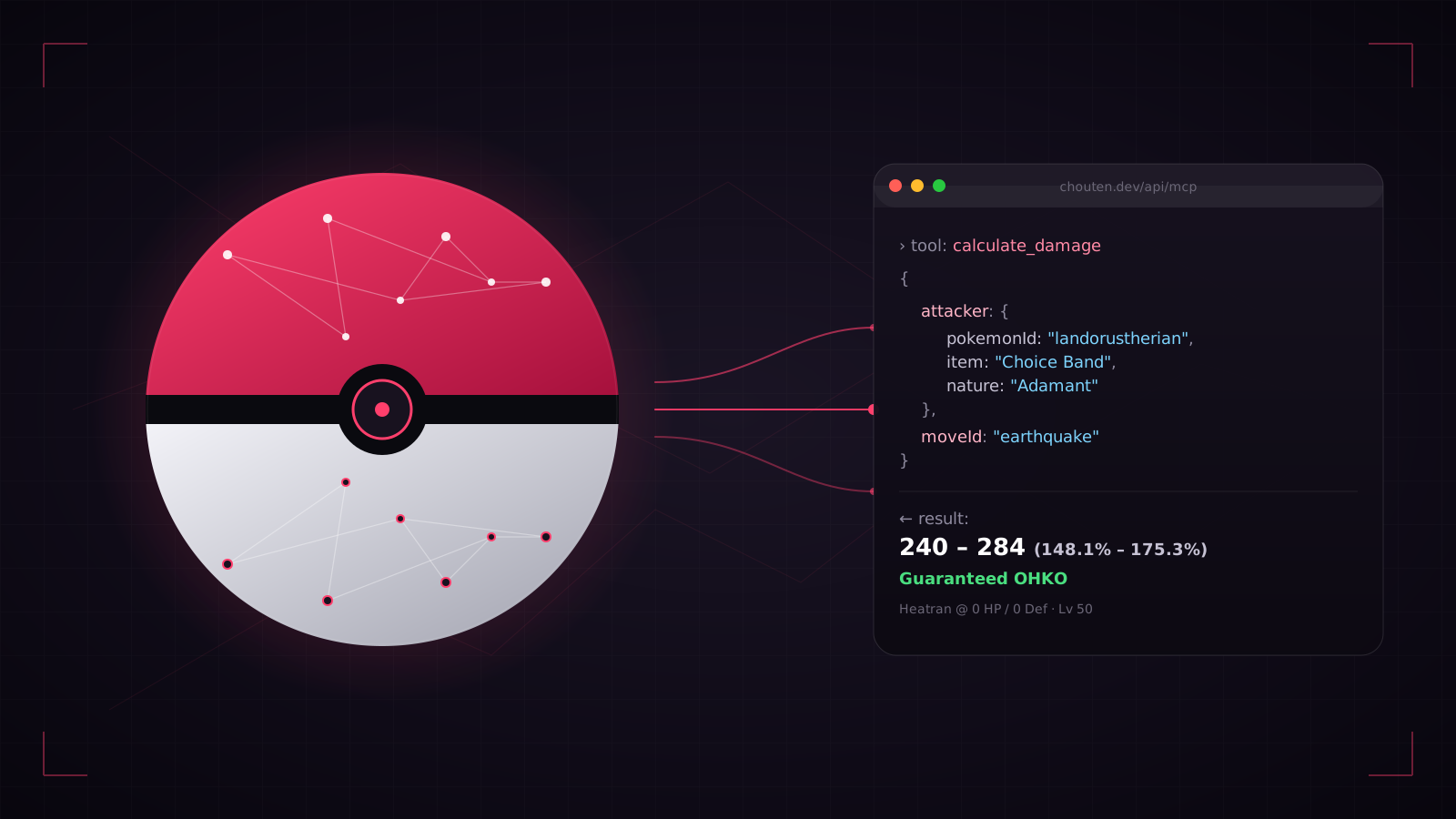
Every build decision should be verified in the Damage Calculator at Level 50 — do not transplant numbers from a Showdown calc you ran at Level 100.
Putting it together
Level 50 is not a minor tuning knob. It reshapes how EVs translate into stats, compresses the Speed tier ladder, rewards priority moves, and changes the arithmetic of every damage roll. Combined with the 66-EV cap, it produces a format where teams win on careful tuning against specific threats rather than on raw base stats.
When you start a new team, work through three passes: pick your archetype, tune your spreads against the current meta, and validate every major interaction in the damage calc at Level 50. In that order.